How I Survived My First Big Investment Loss — And What It Taught Me About Risk
Losing money in the market feels like getting punched in the gut. I remember staring at my portfolio, heart racing, wondering where I went wrong. As a beginner, I thought growth was all that mattered — until reality hit. That painful moment became my crash course in real risk management. This is not a “get rich quick” story. It’s about what happens when things go south — and how smart risk control can save your financial future. It’s about learning the hard way that protecting what you have is just as important as growing it. And most of all, it’s about turning fear into focus, confusion into clarity, and loss into long-term strength.
The Day Everything Went Red
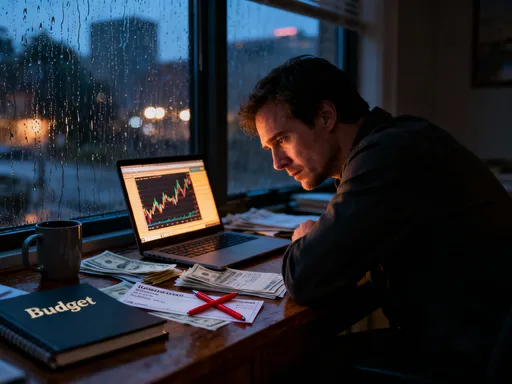
It started on a quiet Sunday evening. I was scrolling through my phone, sipping tea, when a market alert flashed across the screen. One of my holdings — a tech stock I had bought based on a friend’s recommendation and a few glowing headlines — had dropped 18% in after-hours trading. I blinked, assuming it was a glitch. But then another alert followed. And another. By midnight, nearly every position in my portfolio was deep in the red. The next morning, I sat at my kitchen table, eyes fixed on my laptop, watching numbers I had once proudly watched climb now plummeting like stones. My breath grew shallow. My hands trembled. I felt a wave of nausea. This wasn’t just a dip — it was a collapse, and I was in the middle of it.
What made it worse was that I had no plan. I had never considered the possibility of a loss of this magnitude. I had bought into the idea that if a company sounded promising, and the stock was rising, then I was making a smart move. I didn’t research the business model. I didn’t analyze the balance sheet. I didn’t set a target price or a stop-loss. I simply believed in the hype. When the market turned, I was exposed — emotionally and financially. The worst part? I almost sold everything in a panic. The thought of locking in losses was unbearable, but the thought of watching them grow even larger was worse. I hovered over the “sell” button for nearly an hour, paralyzed by indecision.
That moment was a wake-up call. I realized I hadn’t been investing — I had been speculating. There’s a crucial difference. Investing is a disciplined process grounded in research, strategy, and risk awareness. Speculating is hoping, guessing, and reacting. I had mistaken confidence for competence. I had assumed that because the market had been kind to me in the past, it would continue to be. But markets don’t care about your hopes, your timeline, or your emotions. They reward preparation and punish overconfidence. That Sunday night wasn’t just about losing money. It was about losing illusions — the illusion that growth is guaranteed, that trends last forever, and that risk only happens to other people.
What Risk Management Actually Means (It’s Not Just “Don’t Lose Money”)
Before my loss, I thought risk management meant avoiding risky stocks or staying out of volatile markets. I imagined it as a defensive move — something cautious people did while the bold ones got rich. I was wrong. Risk management isn’t about playing it safe. It’s about playing smart. It’s not a barrier to success — it’s the foundation of it. True risk management is a system of rules and habits that guide your decisions before emotions take over. It’s not reactive. It’s proactive. It’s not about fear. It’s about control.
Let’s be clear: risk cannot be eliminated. Every investment carries it. But it can be understood, measured, and managed. For example, I once put 40% of my portfolio into a single stock because I believed in its potential. That wasn’t investing — it was a bet. A smart investor might believe just as strongly in a company but limit exposure to a small portion of their portfolio. That way, even if the stock fails, the overall impact is contained. That’s the essence of risk management: ensuring that no single decision can ruin you.
Think of it like driving. You wouldn’t get behind the wheel without a seatbelt, airbags, or knowledge of the rules of the road. Yet many people invest without any safety mechanisms. They don’t define how much they’re willing to lose. They don’t know when to exit. They don’t consider what happens if their assumptions are wrong. That’s like driving blindfolded. Risk management provides the tools — position sizing, diversification, stop-losses, and clear exit strategies — that allow you to navigate uncertainty with confidence. It doesn’t guarantee profits, but it increases the odds that you’ll survive long enough to achieve them.
Another misconception is that risk management only matters during downturns. In reality, it’s most important when everything feels fine. That’s when overconfidence creeps in. That’s when people take on more risk without realizing it. A disciplined investor reviews their risk framework regularly — not just when the market crashes, but when it’s booming. Because the real danger isn’t volatility. It’s complacency.
The Three Filters I Now Use Before Every Investment
After my loss, I knew I needed a better system. I didn’t want to rely on gut feelings or hot tips anymore. I wanted a repeatable, rational process — something I could trust when emotions ran high. So I created a three-filter checklist that I now apply to every investment decision. It’s simple, but it’s powerful. These filters aren’t about predicting the future. They’re about protecting the present.
The first is the conviction filter: Do I truly understand this investment? Not just the name of the company or the industry it’s in, but its business model, competitive advantages, financial health, and risks. If I can’t explain how it makes money in simple terms, I don’t invest. This filter stopped me from buying into another tech stock last year that was trending on social media. I didn’t understand its revenue model, and I wasn’t willing to learn it in time. So I passed. A year later, the stock had lost 60% of its value. My lack of understanding wasn’t a flaw — it was a warning sign.
The second is the exposure filter: How much of my portfolio am I risking, and can I afford to lose it? I now limit any single stock to no more than 5% of my total portfolio. For higher-risk assets, like individual bonds or sector-specific ETFs, I go even lower. This isn’t about missing out on big gains — it’s about ensuring that no single loss can derail my financial goals. I learned this the hard way when I lost a significant portion of my savings in one stock. Now, even if an investment goes to zero, my overall portfolio remains stable enough to recover.
The third is the exit filter: What will make me sell? I used to hold losing positions because I didn’t want to “realize the loss.” That’s emotional thinking. Now, I decide my exit strategy before I buy. It could be a price target, a time limit, or a change in fundamentals. For example, if a company misses two consecutive earnings targets or takes on too much debt, I have a rule to reassess immediately. This takes the emotion out of selling. It turns a painful decision into a mechanical one. These three filters have transformed my approach. They don’t guarantee success, but they prevent reckless mistakes.
Diversification Done Right (Not Just “Spread It Around”)
I used to think I was diversified because I owned five different stocks. That’s a common mistake. Owning multiple stocks in the same sector — like three tech companies and two consumer brands — doesn’t protect you when the entire market corrects. True diversification means spreading risk across different asset classes, industries, and economic drivers. It’s not about owning more — it’s about owning different.
After my loss, I restructured my portfolio to include a mix of equities, investment-grade bonds, and cash equivalents. I didn’t do this to maximize returns. I did it to reduce volatility and create stability. When stocks fall, bonds often hold their value or even rise. When interest rates change, cash gives me flexibility. This balance doesn’t eliminate risk, but it smooths out the ride. I also diversified across sectors — healthcare, utilities, consumer staples, and international markets — so that a downturn in one area doesn’t wipe out my entire portfolio.
Another key practice is annual rebalancing. Over time, some investments grow faster than others, shifting the original balance of your portfolio. If I started with 60% stocks and 40% bonds, a strong market year might push that to 70-30. That increases my risk exposure without me even realizing it. Once a year, I review my allocations and sell a little from overperforming areas to buy more in underperforming ones. This forces me to “buy low and sell high” — not as a strategy, but as a habit.
Many investors chase high returns and ignore correlation — the degree to which assets move together. If all your holdings rise and fall at the same time, you’re not diversified. True diversification means having assets that respond differently to economic conditions. For example, inflation might hurt stocks but help real estate or Treasury Inflation-Protected Securities (TIPS). By understanding these relationships, I can build a portfolio that’s resilient, not just reactive.
Emotional Discipline: Building Rules, Not Resolutions
Willpower is unreliable. I learned that the hard way. After my loss, I promised myself I’d stay calm next time. I told myself I wouldn’t panic-sell. But when the next market dip came, I was right back in the same emotional spiral. This time, I didn’t blame the market. I blamed my lack of structure. I realized I needed rules — not resolutions. Rules are clear, measurable, and automatic. Resolutions are vague and depend on willpower, which fades under pressure.
So I built systems to remove emotion from my decisions. First, I set a rule not to check my portfolio during periods of high volatility. I limit my reviews to once a week, unless there’s a major life event or a planned rebalancing. This prevents me from overreacting to short-term noise. Second, I use price alerts to notify me when a stock hits a certain level — not so I can panic, but so I can review it calmly against my exit criteria. Third, I adopted paper trading for new strategies. Before risking real money, I simulate trades to see how I respond emotionally and whether the strategy holds up.
Another powerful tool is the “pre-mortem” checklist. Before buying any investment, I ask: What could go wrong? What if the CEO resigns? What if interest rates rise? What if the product fails? By imagining the worst-case scenario in advance, I’m less shocked when something unexpected happens. This doesn’t make me pessimistic — it makes me prepared. I also keep a journal of every investment decision, noting my reasoning, expected timeline, and risk factors. When I review it later, I can see patterns in my thinking and improve over time.
Emotional discipline isn’t about suppressing feelings. It’s about creating space between feeling and action. The market will always provoke fear and greed. The difference is whether you let them drive your decisions. By treating investing as a process — not a performance — I’ve gained confidence. I don’t need to be right every time. I just need to be consistent.
Learning from the Pros: What Beginners Miss About Risk Control
Amateur investors focus on returns. Professional investors focus on risk-adjusted returns. That’s the key difference. A pro doesn’t measure success by how much they make in a bull market. They measure it by how little they lose in a bear market. They’re not trying to hit home runs. They’re trying to avoid strikeouts. Their goal isn’t to outperform every year — it’s to stay in the game for decades.
One concept that changed my thinking is the Sharpe Ratio — a measure of return per unit of risk. A high return with extreme volatility isn’t impressive if it comes with sleepless nights and massive drawdowns. Professionals aim for steady, sustainable growth. They use tools like stop-loss orders, hedging strategies, and position limits to control risk. They also accept that they’ll be wrong sometimes. The mark of a skilled investor isn’t perfection — it’s damage control.
Another lesson is patience. Beginners often chase trends, jumping into hot sectors after they’ve already risen. Professionals wait for mispricings — times when fear has driven prices below intrinsic value. They buy when others are selling, not because they’re brave, but because their risk framework allows them to act when emotions are high. They also hold cash as a strategic asset, not a sign of inactivity. Cash gives them dry powder to deploy when opportunities arise.
Perhaps the most important insight is that risk control is invisible until it matters. When the market is rising, disciplined investors don’t look impressive. They’re not the ones bragging about 50% gains. But when the tide turns, they’re the ones still standing. That’s the power of risk management — it doesn’t shine in good times. It saves you in bad ones.
Turning Pain into Power: How My Loss Became My Greatest Teacher
Losing money hurt. It wasn’t just the financial hit — it was the blow to my confidence, my pride, my sense of control. But looking back, I realize that the real failure wouldn’t have been the loss itself. The real failure would have been ignoring what it taught me. That painful experience forced me to confront my assumptions, rebuild my approach, and develop habits that serve me for life.
I no longer measure my success by portfolio value alone. I measure it by discipline, consistency, and peace of mind. I’ve learned that wealth isn’t built in a single trade — it’s built over time, through small, smart decisions. Risk management isn’t a burden. It’s an enabler. It gives me the freedom to stay invested, to ride out volatility, and to focus on long-term goals without fear.
Every investor will face losses. Markets go down. Companies fail. Economies change. The difference isn’t in avoiding pain — it’s in preparing for it. It’s in having a plan, sticking to principles, and learning from mistakes. My first big loss wasn’t the end of my investing journey. It was the beginning of a smarter, stronger one. And if you’re reading this after your own setback, know this: you’re not behind. You’re being taught. The most valuable lessons in finance aren’t found in textbooks. They’re earned — one loss, one lesson, one rule at a time.