Tired of Forgetting Your Daily Health Goals? This Simple App Habit Changed Everything
We’ve all been there—setting big health goals only to forget them by Wednesday. You download an app, promise to track your water, steps, or sleep, but life gets busy. The notifications pile up, and motivation fades. What if managing your health didn’t feel like another chore? What if the apps you already use could quietly support you, without stress or complexity? It’s not about perfection—it’s about making small, consistent moves that actually stick. And after years of trying every tracker, dashboard, and reminder system out there, I finally found something that works not because it’s flashy, but because it feels like it was made for real life.
The Morning Struggle: When Good Intentions Fade by 9 AM
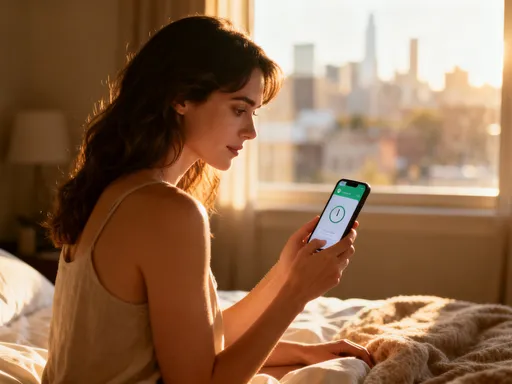
Let’s paint a familiar picture. Your alarm goes off at 6:30 a.m., and before your feet even hit the floor, you’re already planning your ‘perfect’ day. Today’s the day you’ll drink eight glasses of water, walk 10,000 steps, eat three balanced meals, and be in bed by 10 p.m. You open your health app with determination, tap a few things, maybe log your morning weight or mood, and feel that little spark of accomplishment. But then—life. The kids need breakfast, the dog needs a walk, your work meeting starts early, and suddenly it’s 9 a.m. and you’ve already skipped your morning stretch, forgotten your water bottle, and eaten a granola bar standing up in the kitchen. By noon, the app hasn’t been touched, the notifications are ignored, and that spark? Gone.
I used to live this cycle every single week. I’d tell myself, ‘Next Monday, I’ll try again.’ I had five different health apps on my phone—fitness trackers, meal loggers, sleep monitors—and yet, I felt more overwhelmed than supported. The problem wasn’t my willpower. It wasn’t that I didn’t care about my health. The problem was that these apps weren’t built for someone like me—a busy mom, a working woman, someone juggling a hundred things before lunch. They were built for data lovers, for fitness fanatics, for people who have time to log every calorie and rep. And so, every time I failed to keep up, I felt like I was the one who fell short. But here’s what I’ve learned: if a tool doesn’t fit your life, it’s not your fault when it doesn’t work.
What finally changed for me wasn’t a new app. It was a new mindset. Instead of asking, ‘How can I fit my life into this app?’ I started asking, ‘How can this app fit into my life?’ That small shift made all the difference. Because the truth is, we don’t need more tracking. We need smarter tracking—tracking that feels so easy, so natural, that we don’t even think about it. And that’s exactly what I want to share with you.
Why Most Health Apps Don’t Stick—And What Really Helps
Have you ever opened a health app and felt instantly drained? You’re greeted with a dashboard full of numbers, graphs, and color-coded zones. There’s your sleep score (68—‘room for improvement’), your step count (only 2,147—‘you’re behind’), and your water intake (2 of 8 glasses—‘don’t give up!’). It’s like being scolded by your phone first thing in the morning. And while these apps mean well, they often miss the point. They’re designed to measure performance, not to support progress. And for someone already stretched thin, that kind of pressure is the last thing we need.
Research in behavioral psychology shows that long-term habit change doesn’t come from constant monitoring or punishment for missing goals. It comes from small, repeated actions that feel good, not stressful. Think about it: when was the last time seeing a red ‘low’ alert made you feel motivated? More likely, it made you feel guilty, then discouraged, then ready to close the app and forget about it. That’s the opposite of what we want.
What really helps is simplicity. A study from the American Journal of Preventive Medicine found that users were more likely to stick with health tracking when the process required minimal effort and provided positive feedback. Instead of focusing on what you didn’t do, the best tools highlight what you *did* do—even if it’s small. Did you take a five-minute walk? Great. Did you drink one extra glass of water? That counts. These tiny wins build confidence over time, and confidence leads to consistency.
Another key factor is personalization. Not everyone cares about step counts. Some of us care more about energy levels, mood, or how we feel after meals. A one-size-fits-all app can’t capture that. But a tool that lets you track what *matters to you*—like ‘Did I feel calm today?’ or ‘Was I patient with my kids?’—that’s powerful. It turns health from a checklist into a conversation with yourself. And when tracking feels meaningful, not mechanical, it’s much more likely to last.
The Power of One Tap: Designing for Real Life, Not Perfection
Here’s a truth I’ve learned the hard way: if a habit takes more than ten seconds, it probably won’t stick. Effort is the enemy of consistency. That’s why the most effective health tools aren’t the ones with the most features—they’re the ones that let you do what you need to do in a single tap. No logging, no typing, no navigating menus. Just one quick action that fits into the rhythm of your day.
Take hydration, for example. I used to forget to drink water all the time, even though I knew I should. I’d set reminders, but I’d silence them. I’d buy fancy bottles with time markers, but I’d leave them in the car. Then I discovered a simple trick: I added a water-tracking widget to my phone’s lock screen. Now, every time I unlock my phone—which is dozens of times a day—I see a big blue button that says ‘+1 glass.’ I tap it, and that’s it. No opening an app, no typing, no thinking. It takes less than a second. And because it’s so easy, I actually do it.
This isn’t magic. It’s design. And it’s based on a principle called ‘frictionless habit formation.’ The less friction—mental, physical, or emotional—the more likely we are to follow through. You can apply this to almost any health habit. Want to track your mood? Set up a voice shortcut that says, ‘Hey Siri, I’m feeling good today,’ and have it log in your journal app. Want to log steps? Use an app that syncs automatically with your watch and gives you a gentle morning summary instead of constant alerts. The goal isn’t to track everything. It’s to make the things you *do* track so easy that they become invisible.
I’ll never forget the moment I realized this was working. I was at my daughter’s soccer game, standing on the sidelines, phone in hand. I tapped the water button without even thinking. Later, I checked my log and saw I’d had seven glasses that day—more than I’d had in weeks. And I didn’t feel like I’d ‘forced’ myself to do it. It just… happened. That’s the power of one tap. It turns effort into ease, and ease into habit.
Syncing Health with Your Daily Rhythm, Not Against It
One of the biggest mistakes we make with health apps is trying to add them on top of our lives, like another task on the to-do list. But the most sustainable changes don’t come from adding more. They come from weaving new habits into what we’re already doing. Think of it like knitting—you don’t start a new sweater from scratch every day. You add a few stitches to the same project, over time. Health tracking should work the same way.
For me, the turning point was linking my tracking to existing routines. Instead of setting a random reminder to log my lunch, I started doing it while I was cleaning up the kitchen. Instead of trying to remember to stretch, I do it while I’m waiting for the coffee to brew. These aren’t extra moments—they’re moments I was already living. And by attaching a small health habit to them, I’ve made progress without adding stress.
Technology can help with this. Many apps now support location-based or time-based triggers. For example, I have a reminder set to appear on my phone when I get home from my afternoon walk. It says, ‘How did you feel today?’ with three quick options: ‘great,’ ‘okay,’ or ‘tired.’ I tap one, and it logs my mood and energy level. It takes two seconds, and because it’s tied to a habit I already have—walking the dog—it feels natural, not forced.
Another trick is calendar integration. I use a wellness app that checks in with me every Sunday evening with a simple question: ‘What’s one small health goal for this week?’ I answer, and it sends me a gentle reminder midweek to check in. No pressure, no judgment—just a nudge at the right time. These small syncs make tracking feel like part of my life, not something separate from it. And when it feels like part of your life, you don’t quit when life gets busy. You just keep going.
Turning Data into Real Confidence—Not Just Numbers
Let’s be honest: most of us don’t care about data. We care about how we feel. We want more energy, better sleep, less stress, and the confidence that we’re doing okay. That’s why the real power of health apps isn’t in the numbers they collect—it’s in the stories they help us see. Because when you look back over time, you start to notice patterns. And those patterns? They’re empowering.
A few months ago, I started tracking my energy levels each afternoon. I didn’t log meals or calories—just how I felt at 3 p.m. After a few weeks, I saw a clear trend: on days when I ate a real breakfast—something with protein, not just coffee and toast—I had way more energy in the afternoon. On days I skipped breakfast? Crash city.
That simple insight changed everything. I didn’t need a diet plan or a strict rule. I just needed to see the connection. And once I saw it, I started making better choices—not because I was forcing myself, but because I *wanted* to feel good. That’s the difference between tracking for guilt and tracking for growth. One makes you feel broken. The other makes you feel capable.
The best apps support this kind of insight. They don’t just show you your data—they help you understand it. Some even send weekly summaries that highlight trends, like ‘You’ve had better sleep on nights when you turned off screens by 9 p.m.’ or ‘Your stress levels have been lower this week.’ These aren’t commands. They’re observations. And they help you build self-trust—the quiet confidence that you know your body, your rhythms, and what works for you.
Sharing Progress Without Pressure—Support That Feels Safe
Accountability can be powerful, but not all sharing feels good. I used to join those social fitness challenges where everyone posts their steps or workouts. At first, it was fun. But soon, it felt like a competition. I’d see someone hit 15,000 steps and instantly feel like I’d failed—even if I’d had a great day in other ways. And if I didn’t post? Guilt. If I did post? Pressure. It wasn’t support. It was performance.
What I’ve learned is that the best kind of sharing is quiet, private, and kind. It’s not about proving anything. It’s about feeling connected. For example, my sister and I now use a shared digital journal where we each log one small win every day. It could be ‘drank water,’ ‘took a walk,’ or ‘said no to extra work.’ We don’t comment. We don’t compare. We just see each other showing up. And that’s enough.
Some apps now offer private family or partner modes where you can share progress without public posts or leaderboards. We use one to track our family’s screen-free evenings. No scores, no rewards—just a shared space to mark when we unplugged together. It’s not about perfection. It’s about encouragement. And because there’s no pressure, we actually want to do it.
The key is emotional safety. When sharing feels optional, kind, and judgment-free, it becomes a source of strength, not stress. And for busy women who already carry so much, that kind of support can make all the difference.
Building a Health Habit That Lasts—One Tiny Win at a Time
Here’s what I’ve come to believe: lasting change isn’t about big leaps. It’s about tiny, consistent steps that add up over time. And technology, when used wisely, can be a gentle companion on that journey—not a drill sergeant, not a scoreboard, but a quiet helper that says, ‘You’ve got this.’
The habits that have stuck for me aren’t the ones I forced. They’re the ones I made easy, meaningful, and kind. I track what matters to me. I use tools that fit my rhythm. I celebrate small wins. And when I miss a day? I don’t beat myself up. I just begin again.
That’s the real secret. It’s not about the app. It’s about how the app makes you feel. Does it leave you feeling capable, not guilty? Does it help you notice progress, not just perfection? Does it fit into your life, or does it fight against it?
If you’re tired of starting over every Monday, I want to invite you to try something different. Pick one tiny habit—one glass of water, one deep breath, one moment of gratitude. Find a way to track it in under ten seconds. Tie it to something you already do. And let it be enough.
Because you don’t need to be perfect to be healthy. You just need to be consistent, kind, and willing to show up for yourself—one gentle step at a time. And if a little app can help you do that? Well, that’s not just technology. That’s self-care.